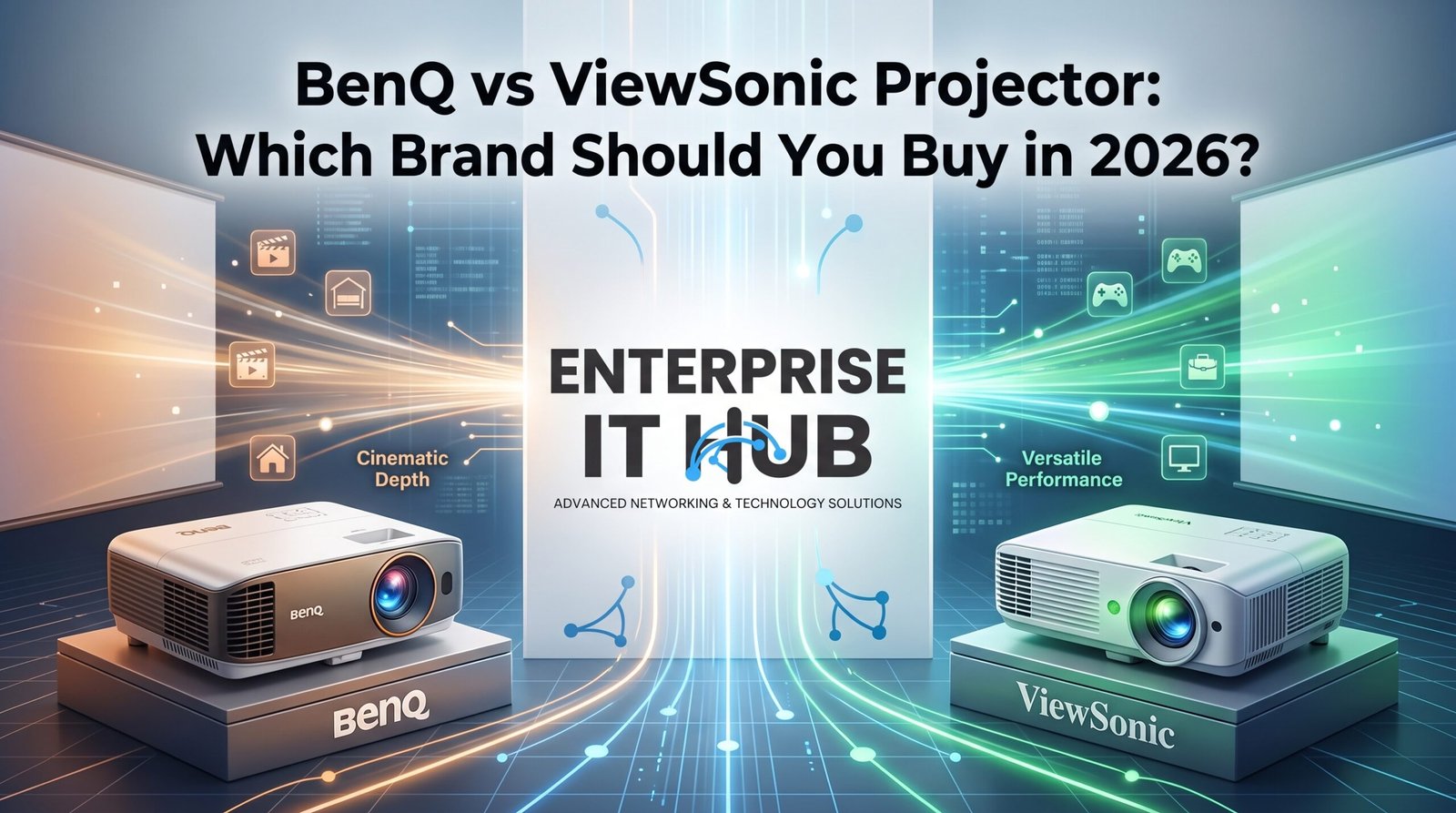
BenQ vs ViewSonic Projector: Which Brand Should You Buy in 2026?
Two Giants, One Screen — Only One Earns a Place in Your Room
The BenQ vs ViewSonic debate has split home theater buyers, gamers, and office managers for years — and in 2026, the stakes are higher than ever.
You’ve done the research. You know you want a projector. You’ve narrowed it down to two brands that dominate every “best of” list: BenQ and ViewSonic. Now you’re stuck. Same price range. Similar specs on paper. Zero idea which one actually performs when the lights go down.
This isn’t a coin flip. The wrong projector means washed-out colors in your living room, input lag killing your gaming sessions, or a boardroom presentation that looks like it was made in 2009. That’s real money wasted on the wrong call.
We’ve dug into both brands — specs, real-world performance, use cases, and long-term value. By the end of this article, you’ll know exactly which brand fits your situation.
Table of Contents
The Projector Market in 2026
The global projector market crossed $8.2 billion in 2025 — and it’s still climbing. Home theater adoption surged after the 65-inch TV market plateaued. Gamers discovered that 120-inch screens change everything. And businesses that returned to in-office work needed presentation hardware that doesn’t embarrass them.
BenQ and ViewSonic together hold roughly 35% of the consumer and SMB projector market in North America. That’s not an accident. Both companies have invested heavily in display technology, lamp-free laser systems, and low-latency gaming modes.
⚠️ ALERT: By 2026, projectors under $1,000 now routinely offer 4K resolution and laser light sources — features that cost $3,000+ just five years ago. If you’re still comparing based on old data, you’re making decisions with outdated information.
The question isn’t whether these brands are good. They both are. The question is: which one is built for your exact use case?
BenQ vs ViewSonic: Brand Overview
Before we get into specs, it helps to understand where each brand comes from — because that history shapes what they build today.
BenQ was founded in Taiwan in 2001. Their display division spun out of Acer’s monitor business, which means they came into projectors with a deep understanding of color science, calibration, and professional-grade imaging. BenQ’s Cinema Master video technology and proprietary color wheel tech are not marketing buzzwords — they’re engineering decisions that show up in actual picture quality.
ViewSonic was founded in California in 1987. They built their reputation on monitors for enterprise and education markets. When they moved into projectors, they brought that enterprise DNA with them — reliability, brightness, and broad compatibility over artistic color refinement.
BRAND DNA AT A GLANCE
─────────────────────────────────────────────
BenQ            │ ViewSonic
─────────────────────────────────────────────
Taiwan origin   │ California origin
Display-first   │ Enterprise-first
Color science   │ Brightness + reliability
Cinema & gaming │ Business & education
ISF certified   │ Wide throw flexibility
─────────────────────────────────────────────
Neither brand is “better” in a vacuum. But that DNA difference shows up clearly when you compare use cases.
BenQ vs ViewSonic: Home Theater Performance
This is where BenQ pulls ahead — and it’s not close.
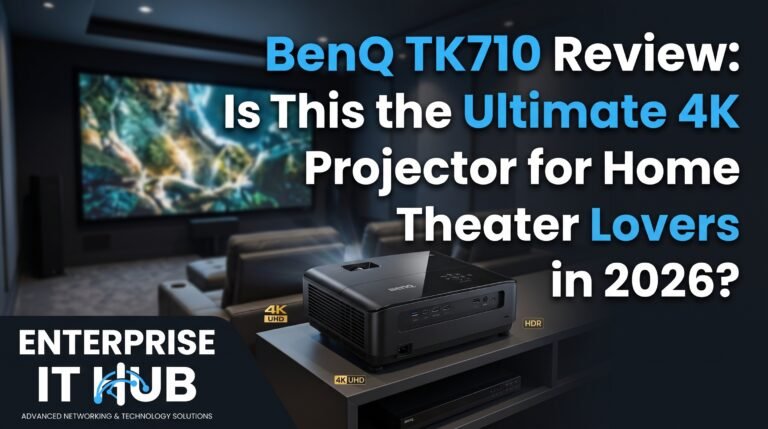
BenQ’s home theater lineup is built around color accuracy. Their Cinema Master technology delivers HDR10 processing, 100% DCI-P3 coverage on flagship models, and pre-calibrated picture modes that actually look cinematic out of the box. The BenQ TK710 4K is a prime example — true 4K, 3,200 lumens, and a THX-certified color profile that most competitors can’t touch.
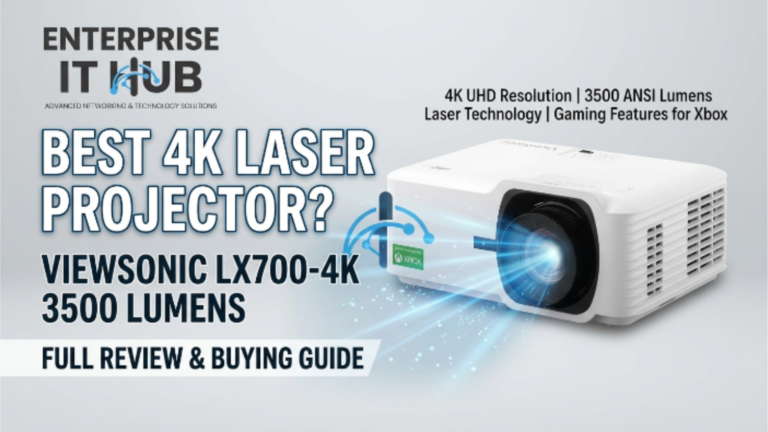
ViewSonic’s home theater options, like the LX700-4K, are solid. 3,500 lumens of laser brightness, long lamp life, and sharp 4K resolution. But their color tuning doesn’t match BenQ’s depth. You’ll notice the difference in dark scenes — shadow detail, near-black gradation, and skin tone accuracy all favor BenQ.
🔴 WARNING: Don’t judge a home theater projector by lumens alone. A 4,000-lumen projector with poor color calibration will look worse in a dark room than a 2,500-lumen unit with proper HDR processing. Brightness without color science is just a flashlight.
Winner for Home Theater: BenQ
If your primary use case is movies and streaming — Netflix, Apple TV+, 4K Blu-ray — BenQ’s color science justifies the investment. Browse the full BenQ projector collection at Enterprise IT Hub to find the right model for your room size and budget.
BenQ vs ViewSonic: Gaming Performance
Gaming is where the BenQ vs ViewSonic comparison gets genuinely competitive.
BenQ’s gaming projectors — like the TK700ST — are purpose-built for low latency. The TK700ST delivers 4K at 60Hz with a 16ms input lag, or drops to 1080p at 240Hz for competitive gaming. That’s TV-class response time on a 100-inch screen. Their dedicated Game Mode disables post-processing automatically, and the result is a projector that doesn’t make you feel like you’re fighting your own display.
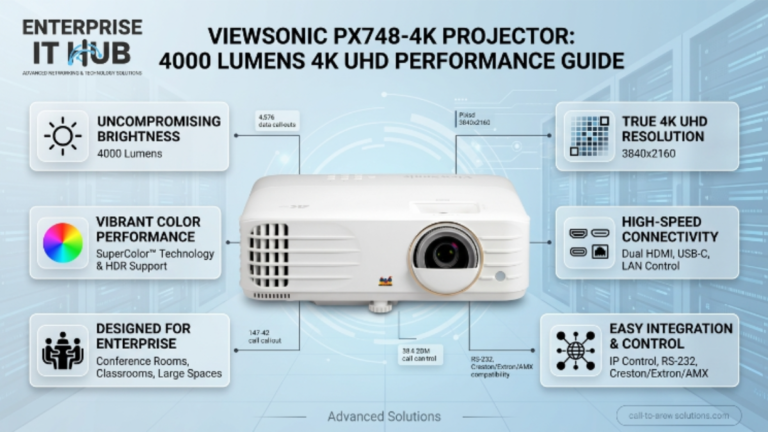
ViewSonic’s gaming options are no joke either. The PX748-4K delivers 4K UHD at 60fps with a 4.9ms input lag in Enhanced Gaming Mode. For console gaming and single-player titles, that’s more than fast enough. ViewSonic also handles HDR in gaming scenes better than many reviewers give them credit for — their SuperColor technology adds visible pop to games with rich palettes.
| Feature | BenQ TK700ST | ViewSonic PX748-4K |
|---|---|---|
| Resolution | 4K UHD | 4K UHD |
| Input Lag | 16ms (4K) / 8ms (1080p) | 4.9ms (Enhanced Mode) |
| Brightness | 3,000 ANSI lumens | 4,000 ANSI lumens |
| Gaming Mode | Dedicated Game Mode | Enhanced Gaming Mode |
| Best For | Console + PC | Console + Presentations |
| Light Source | Lamp | Lamp |
⚠️ ALERT: If you play competitive FPS titles — Call of Duty, Valorant, Apex Legends — input lag matters more than resolution. At 4K, even a 16ms delay is noticeable. Drop to 1080p and BenQ’s 8ms response time puts it in the competitive range.
Winner for Gaming: Slight edge to ViewSonic (for raw latency at 4K), BenQ wins for versatility (gaming + movie hybrid use).
For a deep dive into BenQ’s gaming projector performance, read our BenQ TK700ST Review.
BenQ vs ViewSonic: Business and Classroom Use
Flip the use case to conference rooms and classrooms, and ViewSonic takes the lead.
ViewSonic’s product lineup for business is deeper and more diverse. They offer ultra-short throw models, wireless presentation options, and projectors designed to handle the bright, mixed-light environments that offices and classrooms deal with every day. Their LightStream technology optimizes brightness distribution across the full image — important when you can’t control ambient light.
BenQ has business projectors too. Their LK970 and LU9750 are serious 4K laser units for large venues. But for SMB and classroom budgets — the $800 to $1,500 range — ViewSonic offers more targeted options with better warranty support structures for institutional buyers.
ViewSonic also edges out BenQ on connectivity flexibility for business. Multiple HDMI ports, USB-A playback, wireless dongles, and compatibility with Windows collaboration tools make ViewSonic projectors easier to deploy in mixed-device environments.
⚠️ ALERT: For US-based business buyers, ViewSonic’s 3-year limited warranty with dedicated business support is worth factoring into your TCO calculation. BenQ’s standard warranty is competitive but ViewSonic’s enterprise support tier is broader.
Winner for Business/Classroom: ViewSonic
Browse the ViewSonic projector lineup at Enterprise IT Hub for models built around business and education deployments.
Price Comparison: Where Does Your Money Go?
Both brands offer projectors at every price tier — but you get different things for the same dollars.
| Budget Range | BenQ Best Pick | ViewSonic Best Pick |
|---|---|---|
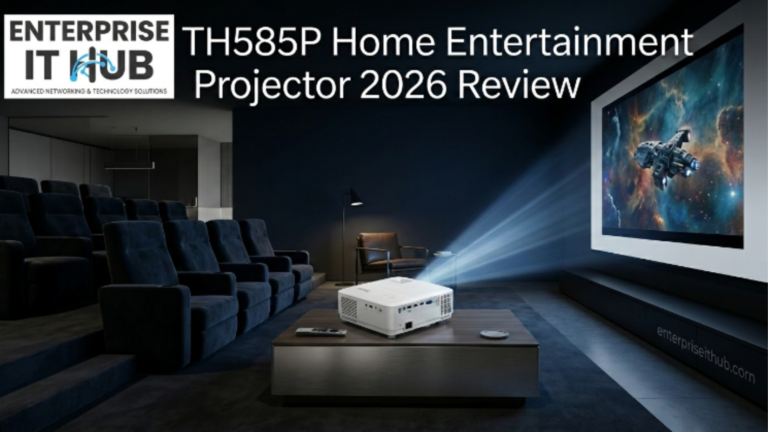
| Under $500 | TH585P (1080p, 3,500L) | PA503W (WXGA, 3,600L) |
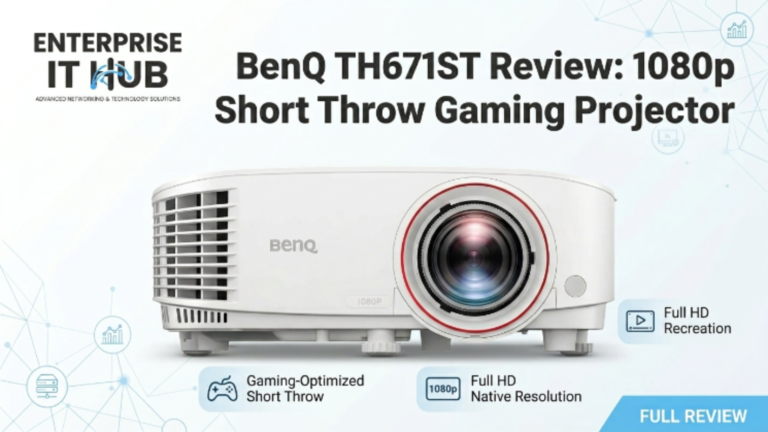
| $500–$900 | TH671ST (1080p ST gaming) | PX748-4K (4K, 4,000L) |
| $900–$1,500 | TK700ST (4K gaming) | LX700-4K (4K laser) |
| $1,500–$3,000 | TK710 (4K cinema) | LS751HD (1080p laser) |
| $3,000+ | LK970 (4K laser venue) | PX9600 (WUXGA venue) |
BenQ delivers stronger color and cinema performance per dollar. ViewSonic delivers stronger brightness and flexibility per dollar.
If you care about picture quality above all else, BenQ wins at every price tier. If you care about brightness, connectivity, and reliability for mixed environments, ViewSonic frequently offers better value.
Brightness and Image Quality Head-to-Head
Brightness and image quality are not the same thing — and confusing them is the most common projector buying mistake.
Brightness (ANSI Lumens): ViewSonic typically outshines BenQ on raw lumen output at comparable price points. The PX748-4K at 4,000 lumens versus the TK700ST at 3,000 lumens is a real gap. For well-lit rooms, ViewSonic handles ambient light better.
Color Accuracy: BenQ wins here — and it’s not a minor difference. BenQ’s DLP panels with their 6-segment color wheels and ISF-certified calibration produce colors that match studio intent. Side-by-side on a calibrated display, BenQ projectors render skin tones, foliage, and shadows more accurately.
Contrast Ratio: BenQ takes the edge in native contrast, which matters most for dark room viewing. Deep blacks, better shadow detail, and more convincing HDR tone mapping.
Sharpness: Both brands hit native 4K resolution similarly. This is not a meaningful differentiator between them.
IMAGE QUALITY SCORECARD
─────────────────────────────────────
Category         │ BenQ  │ ViewSonic
─────────────────────────────────────
Raw Brightness   │  ★★★★ │  ★★★★★
Color Accuracy   │ ★★★★★ │  ★★★★
Contrast Ratio   │ ★★★★★ │  ★★★★
Sharpness (4K)   │  ★★★★ │  ★★★★
HDR Performance  │ ★★★★★ │  ★★★★
─────────────────────────────────────
Which Brand Should You Buy?
Here’s the honest answer: it depends on one question — what is this projector’s primary job?
Buy BenQ if:
- Your primary use is movies, streaming, or 4K content
- You watch in a dark or light-controlled room
- You game on console and want a cinematic feel alongside low lag
- Color accuracy and HDR quality matter to you more than raw lumens
- You’re building a dedicated home theater setup
Buy ViewSonic if:
- Your primary use is presentations, classrooms, or conference rooms
- You’re projecting in a room with mixed or ambient light
- You need maximum brightness at a given budget
- Wireless connectivity and multi-device support matter
- You need institutional warranty support for a business deployment
Most home buyers land in the BenQ camp. Most business buyers land in the ViewSonic camp. The overlap is gaming — and there, the choice comes down to whether you prioritize raw latency (ViewSonic at 4K) or overall versatility (BenQ).
Quick Reference Checklist
Before you finalize your purchase, run through this:
PRE-PURCHASE PROJECTOR CHECKLIST
─────────────────────────────────────────────────────
[ ] Defined primary use case (cinema / gaming / business)
[ ] Measured room size and throw distance
[ ] Checked ambient light conditions in viewing space
[ ] Confirmed screen size needed (80", 100", 120"+)
[ ] Compared input lag if gaming use intended
[ ] Verified HDMI 2.0/2.1 port availability
[ ] Checked color gamut spec (DCI-P3 or Rec.709)
[ ] Confirmed warranty terms and support coverage
[ ] Verified replacement lamp or laser life hours
[ ] Compared total cost of ownership over 3 years
─────────────────────────────────────────────────────
Frequently Asked Questions
Q: Is BenQ or ViewSonic better for home use? A: BenQ is the stronger choice for home use — specifically for movies and gaming in light-controlled rooms. Their color science, Cinema Master processing, and HDR accuracy give a more cinematic result than ViewSonic at comparable price points.
Q: Which brand has better 4K projectors under $1,000? A: ViewSonic’s PX748-4K competes strongly in the sub-$1,000 4K category with 4,000 lumens and 4.9ms input lag. BenQ’s comparable 4K options typically start slightly higher. For raw 4K value under $1,000, ViewSonic wins.
Q: Do BenQ projectors last longer than ViewSonic? A: Lamp life is similar between brands — most DLP models offer 4,000 to 10,000 hours depending on mode. Laser models from both brands exceed 20,000 hours. Long-term reliability is comparable; BenQ’s lamp replacement ecosystem is slightly wider in the US market.
Q: Can I use a BenQ or ViewSonic projector outdoors? A: Both brands offer models suitable for outdoor use, but neither manufactures weatherproof projectors. For outdoor setups, you need a minimum of 3,000 lumens — ViewSonic’s brighter models handle ambient outdoor light better than lower-lumen BenQ units.
Q: Which brand is better for a home office setup? A: ViewSonic edges out BenQ for home office use. Better wireless connectivity options, broader throw flexibility, and business-oriented features make ViewSonic projectors easier to integrate into multi-device work setups.
Conclusion
The BenQ vs ViewSonic question doesn’t have a single universal answer — and any article that tells you otherwise is oversimplifying. These are two genuinely excellent brands that solve different problems well.
BenQ owns the cinema and gaming space. If your projector will anchor a home theater or a gaming setup where image quality and color accuracy matter, BenQ consistently delivers a more refined result. ViewSonic owns the business and mixed-environment space. If your projector needs to survive a bright conference room or serve dozens of users across a school, ViewSonic’s brightness and reliability hold up better.
Pick the brand that matches your room and your use case — not the brand with the best spec sheet.
Browse both lineups at Enterprise IT Hub: BenQ Projectors and ViewSonic Projectors — and buy with confidence.